

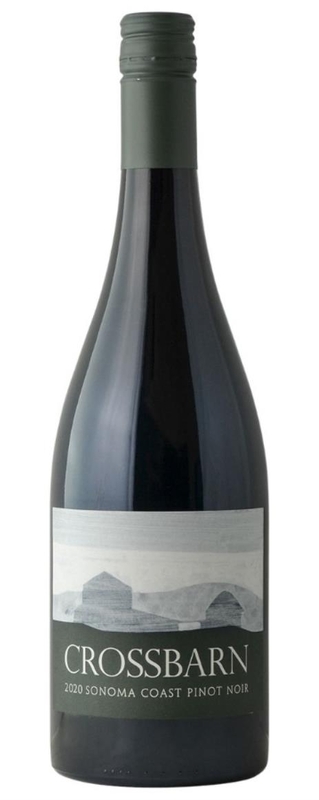
Paul Hobbs - Pinot Noir Russian River 2020
Rött vin från Russian RiverPaul Hobbs Winery, som grundades 1991 av den kända vinkonsulten Paul Hobbs, ligger i Sebastopol, Sonoma County. Vingården är specialiserad på att tillverka exceptionella vingårdsviner och fokuserar på Pinot Noir, Cabernet Sauvignon, Syrah och Chardonnay. Innan han grundade sin vingård hade Hobbs redan samlat på sig ett imponerande CV som konsult, som fått betydande kritikerros för sitt arbete.
| Per flaska: | Per låda: | |
| Pris |
899kr
|
5394kr
|
| Distrikt | California , Russian River |
| Procucenter | Paul Hobbs Winery |
| Artikelnr | 4038 |
| Beställningssortiment | |
| Lagerstatus | |
| Fraktkostnad | 169:- |
| Avnjutes mellan | 2023 - 2027 |
|
Fyllighet |
Fruktsyra |
Strävhet |

Här redovisar och presenterar vi kända vinskribenters utlåtande om specifika viner. Utöver dessa lägger vi in en egen kommentar när vi har provat samma vin.
Druvor
Pinot noir
Tasting note
Medium ruby-purple, the 2020 Pinot Noir is scented of cranberries, underbrush, tobacco leaves and woodsmoke. The palate is light-bodied, silky and bright with earth-laced fruits and a long, spicy finish.
I visited Paul Hobbs and his winemaker Jennie Murphy in the spring of 2022 at the winery in Sebastopol. We tasted through the 2019s and barrel samples of the 2020 vintage, speaking extensively about the wildfires and how they approached the challenges of the season. “The fires started just before harvest on August 17, at the worst possible moment,” they remembered. Fortunately, there was no physical threat from the fire at the winery in Sebastopol, and Paul said areas in Sonoma County affected by coastal winds remained relatively clear. Most of their Napa Valley grapes had been harvested by mid-October when the Glass Fire began dumping smoke into the valley, although over 100 tons of Cabernet Sauvignon were lost. Harvest took place 10-12 days earlier than normal, and yields are down about 15% overall. There will be no Katherine Lindsay Estate or Cuvée Agustina in 2020. “We did all the testing, but those markers are only moderately helpful; they’re not a guarantee,” Paul explained. “If the numbers are high, there is a good chance you have a problem, but when they are baseline, you may still have a problem. With smoke taint, it’s easy [to tell when] you actually perceive ashiness on the palate or some impact on the aroma. But in many cases, it mutes or suppresses the true character of the wine, and you can’t identify it as smoke per se.” In 2017, the effect of smoke on the grapes was obvious, he recalled, but in 2020, things were in “more of a grey zone,” and some lots didn’t show overt damage. Bordeaux varieties in particular will be closely monitored in the cellar until bottling. “It takes time for problems to show up, and the wine could taste fine the first 6-8 months,” Paul said. “We condemned one lot after 14 months, and there were issues with Pinot Noir that had to be bulked out. If there’s any doubt about smoke taint, we would rather play it safe.” From a winemaking perspective, grapes were delicately crushed, and whole cluster usage in Pinot Noir was maximized. “It’s all hypothesis and trial and error,” Jennie said. “Whole cluster is a tool, and I thought it could help. Scientifically speaking, whether it has a cleansing effect is in debate, but it is certainly conceivable.” Like many winemakers in California, they pointed out that they have learned a lot from previous fires and even more in 2020. “We would of course prefer not to have to deal with fires,” Paul quipped. “But we are better equipped today than before.” Economically, both the winery and the grape grower can take a big loss when grapes are damaged by smoke. “You’ve worked all year and suddenly it’s bulk wine,” he lamented. “It’s a hit to our company and a hit to the growers. So if we think the risk is minimal, we are going to move forward, because that’s part of being a good neighbor to our growers. We looked at everything in 2020 and thought we had a good chance. If there's a chance it will work, let's protect our workforce—we are all in this together."
Robert Parker Wine Advocate
Relaterade produkter
Fess Parker Winery - Santa Barbara County Riesling 2021
Bob Cabral - Anne Rose Chardonnay 2020

DuMOL Winery - Chardonnay Wester Reach 2020

Simon Family Estate - Double Blessings 'Peter' 2019